By Bhawana Gupta, Monika Zurek, and John Ingram
In a world facing unprecedented uncertainties, the futureproofing of policies has become more crucial than ever. Foresight tools and methods, widely used across various sectors, play a pivotal role in supporting decision-making by providing an evidence base for assessing challenges, prioritising issues, sense-making, preparing a targeted action plan, and conducting risk assessments.
However, the challenge often lies in aligning these foresight activities with the policymaking cycle to create coherent, impactful policies. This blog provides a glimpse of an ongoing Foresight4Food study in Bangladesh, Jordan, Kenya and Uganda under the Foresight4Food FoSTr programme that explores how foresight tools can be systematically integrated into the policymaking cycle to enhance their utility and contribute to better policy outcomes.
The gap in current practices
Despite the widespread use of foresight methods, there is often a lack of clarity on how their outcomes can feed into decision-making. The foresight activity is frequently not recontextualized for the specific policy problem at hand. This disconnect poses a significant challenge, as the integration of foresight into the policymaking cycle is crucial for developing more resilient and future-proof policies. The goal is to bridge this gap by providing evidence on the most useful foresight tools and methods for each part of the policymaking cycle.
When foresight is integrated into the policymaking cycle, it ensures that future-oriented thinking is consistently applied throughout the policy development process, leading to more coherent and effective policies.
Read also:
The Complexity of Global Drivers of Food System Transformation – by Bhawana Gupta
The global food system needs to be transformed. It needs to deliver better health and improved livelihoods while protecting the environment and minimizing negative social impacts. However, there are many interconnected factors playing a role. Food Systems are complex…
Importance of linking foresight with the policy cycle
Integrating foresight processes with the policy cycle is essential to institutionalize foresight and enhance its usability at national and local levels. Institutionalizing foresight ensures that these methods are systematically applied, enabling policymakers to anticipate and prepare for future challenges effectively. It also ensures inclusiveness and rigour of the policy-making process.
Such work can draw on the experience in several high-income countries have successfully institutionalised foresight within their policymaking structures, demonstrating the benefits of this approach. Some examples are:
- Finland: Finland has a well-established foresight system integrated into its national policy framework. The Finnish Government Foresight Group coordinates foresight activities across various sectors, ensuring that long-term trends and future scenarios are considered in policymaking.
- Singapore: The Centre for Strategic Futures (CSF) in Singapore plays a key role in incorporating foresight into government planning. CSF conducts scenario planning and horizon scanning to support strategic decision-making and policy development.
- United Kingdom: The UK Government Office for Science runs the Foresight Programme, which explores future challenges and opportunities. This programme provides evidence-based insights to inform policy decisions across different government departments.
But what led to the establishment of foresight institutions as an integral part of the policy-making bodies in these countries? It’s the awareness, capacity building and the demand for foresight knowledge which have been crucial. Foresight4Food is playing a major role in its case study middle- and low-income countries in instigating the adoption of foresight across all levels of decision-making processes.
How our research is guiding foresight in middle and low-income countries
While high-income countries have made significant strides in institutionalising foresight, it is equally important for middle- and low-income countries to adopt these practices. The challenges faced by these countries, such as rapid urbanization, climate change, and economic volatility require proactive and informed policy responses.
Research on the appropriate foresight methods for different policymaking stages can significantly aid in institutionalising foresight in such countries by ensuring targeted application and resource efficiency, thus maximising the value of foresight activities. By pinpointing specific methods for each policy stage, governments can allocate limited resources more effectively, avoiding a one-size-fits-all approach. This tailored research provides a clear framework for capacity building, enabling policymakers to apply foresight methods appropriately across different policy stages. Demonstrating the practical benefits of specific methods enhances decision-making, supports institutional integration, and fosters a culture of foresight within government institutions.
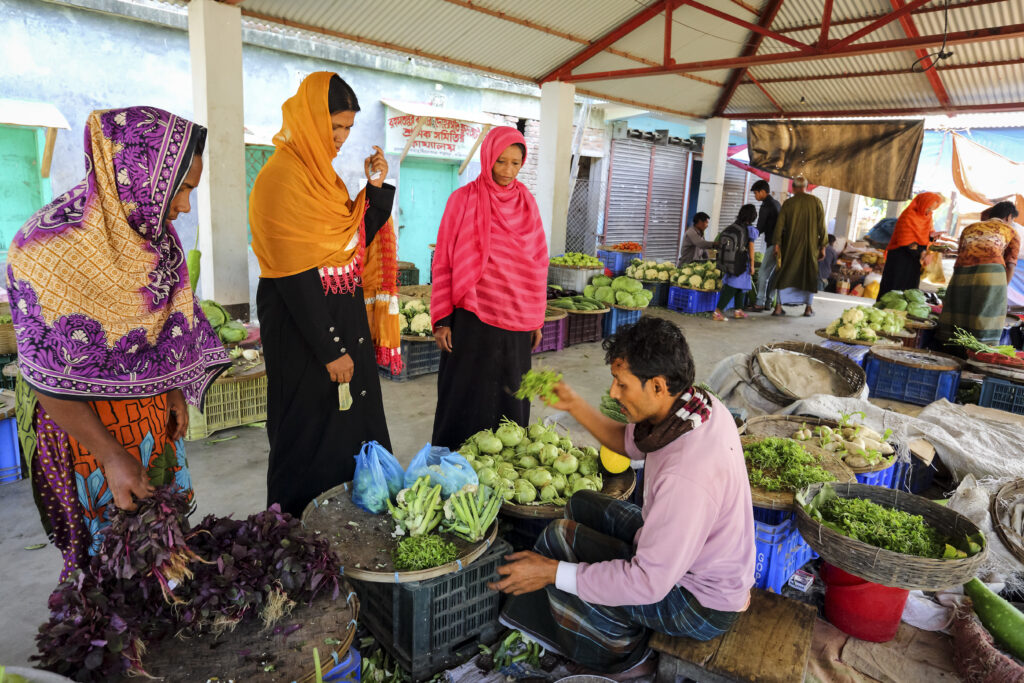
Furthermore, it ensures policy coherence and continuity, establishing standardized foresight practices that maintain consistency even amidst political and administrative changes, ultimately promoting the institutionalisation of foresight in these countries.
Understanding the policymaking cycle
Institutional decision-making follows a structured sequential process known as the policymaking cycle, which guides actions and outcomes through distinct stages. Governments worldwide have adapted this cycle to develop new policies or reform existing ones. This model provides a clear and organized way to understand and analyse how policies are developed and executed.
However, in reality, the policymaking process is rarely this straightforward. It is typically non-linear, iterative, and influenced by a multitude of factors including political dynamics, stakeholder interests, and unexpected events. Despite this complexity, the policy cycle remains an important framework for several reasons but most importantly the principles underlying the policy cycle—such as systematic analysis, stakeholder engagement, and evidence-based decision-making—remain relevant. These principles provide a foundation for effective policymaking, guiding policymakers in navigating the complexities and uncertainties of the real world.
Understanding the policy-cycle stages is the first step, as it allows foresight practitioners to identify where future-oriented insights can be most impactful, ensuring that long-term considerations and potential future scenarios are effectively embedded into the policymaking process. This structured approach enhances the relevance and applicability of foresight outcomes, leading to more robust and resilient policies.
There are many examples of these policy cycles that have been developed and adapted but the essence remains consistent. Typically, it includes stages such as issue identification, policy identification, policy adoption and implementation, and lastly policy monitoring and evaluation. This cycle serves as a valuable model to explore which foresight tools/methods can generate insights needed for processing in the policy cycle.
Mapping foresight methods to policymaking stages
Foresight4Food researchers mapped more than 50 foresight tools and methods that have been implemented for a range of purposes. Sometimes the same tool was used for different purposes, which changes the way the tool was used and applied. Foresight methods can therefore serve various purposes at different stages of the policymaking process.
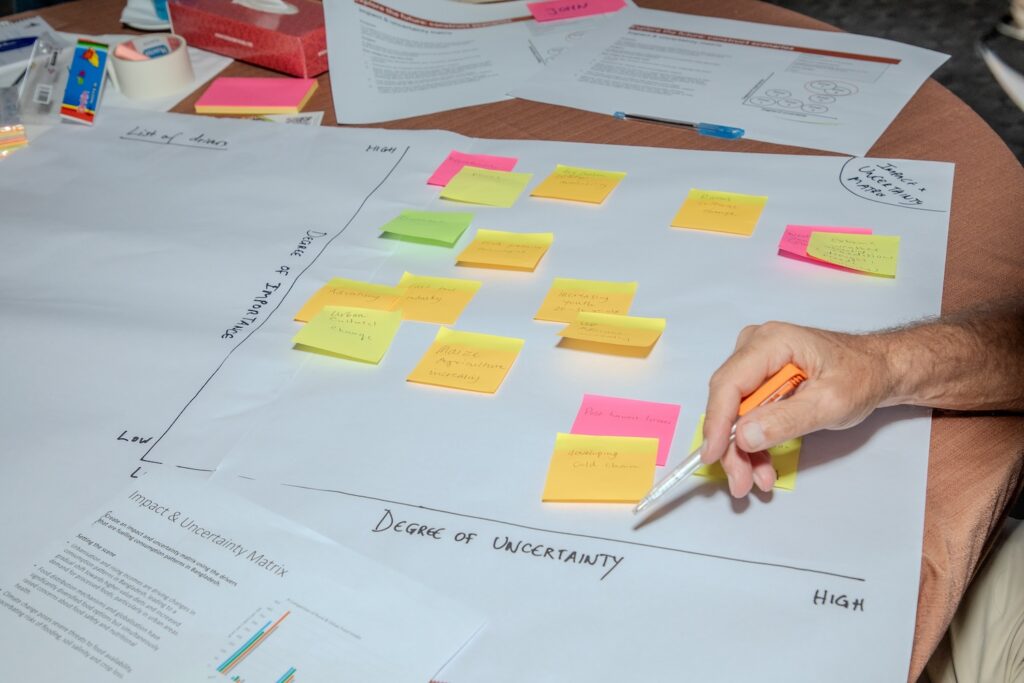
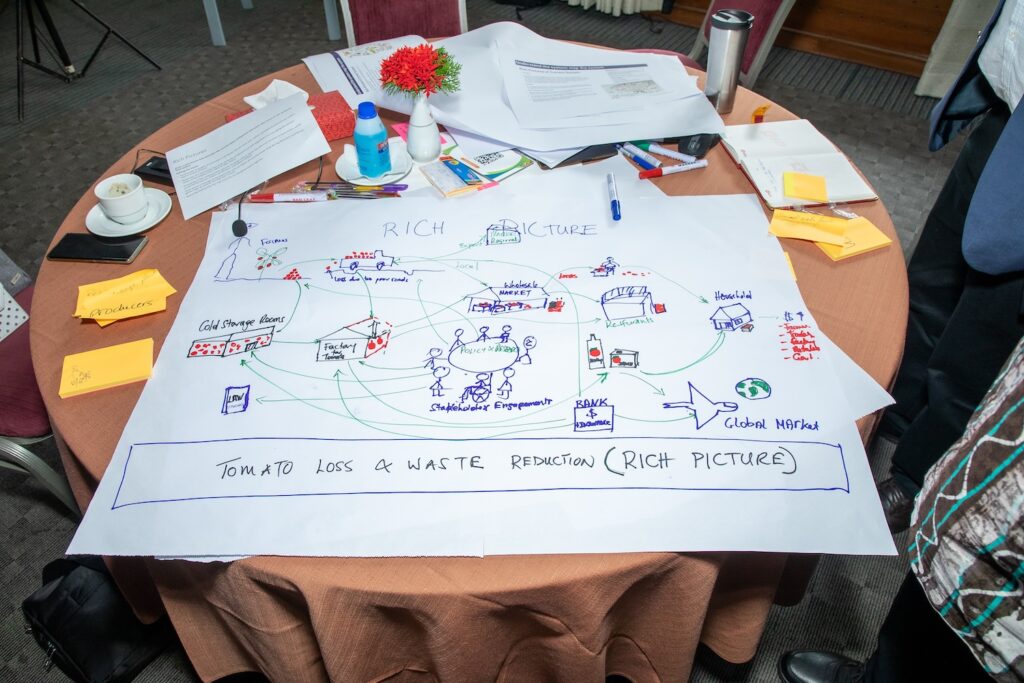
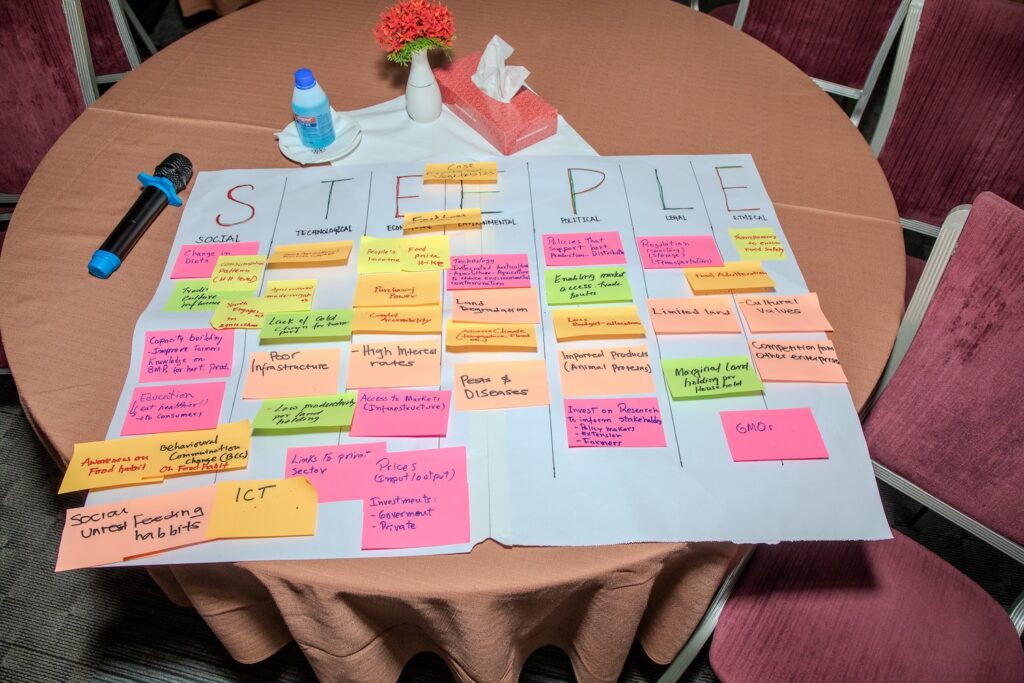
This study highlights several models of the policymaking cycle and how foresight tools can be mapped onto these stages. For example:
- Agenda Setting: Foresight can generate information on challenges, drivers of change, and options for tackling problems, which directs policymakers to develop a policy concept and contextualize the emerging problem.
- Policy Formulation: Scenario planning and trend analysis can help in developing policy options and assessing their potential impacts.
- Policy adoption and implementation: Participatory approaches and Delphi methods can facilitate inclusive participation and build consensus on the preferred policy option. Horizon scanning and risk assessments can enhance policy implementation by raising awareness of future changes and building networks for understanding visions among stakeholders.
- Monitoring and evaluation: Backcasting and impact assessments can be used to evaluate the effectiveness of implemented policies and provide a basis for future decision-making.
In conclusion, integrating foresight tools into the policymaking cycle is crucial for developing more resilient, future-proof policies. While high-income countries have demonstrated the value of institutionalizing foresight, it is vital for middle- and low-income countries to also adopt these practices to address their unique challenges and opportunities. By systematically linking foresight with the policy cycle, policymakers can create more informed, adaptable, and sustainable policies, ultimately contributing to better outcomes for society.
In October 2022, Foresight4food hosted a CFS side event on “Foresight and Future Scenarios for Food Systems Transformation – Building Resilience and Fostering Adaptation to Protect Against Future Crises”. The event was held jointly with the International Fund for Agricultural Development (IFAD), the Forum for Agricultural Research in Africa (FARA) and the CFS High Level Panel of Experts on Food Security and Nutrition (HLPE – FSN).
The event highlighted the importance of taking longer-term perspectives on food systems transformation through the use foresight and scenario analysis. The work of the Foresight4Food Initiative was outlined and a new programme “Foresight for Food System Transformation – (FoSTr)” was launched.
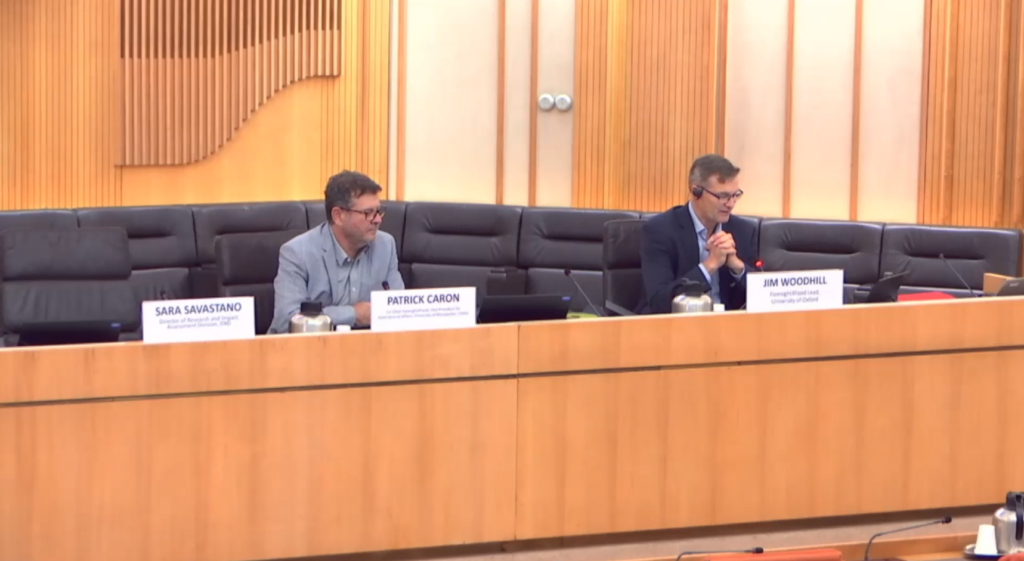
Patrick Caron, International Director at Montpellier University of Excellence / CIRAD opened the event and highlighted the potential of foresight for supporting food systems transformation. He emphasised that foresight is not about trying to predict the future but rather to prepare for a range of different future scenarios and to understand the implications of these for different stakeholder interests. Patrick introduced the work of Foresight4Food, which is promoting and supporting the use of foresight and scenario approaches for food systems analysis and transformation.
The event was moderated by Jim Woodhill, Lead of the Foresight4Food Initiative. He introduced the building blocks of an approach to foresight for food system transformation which has been developed by Foresight4Food. Central to this approach is identifying key trends and critical uncertainties which may influence the future of the entire food system. He indicated how Foresight4Food has been developing and how its overall approach is being tested through work in Africa and Asia. This contributes to the Foresight4Food objectives of supporting a community of practice, a brokering foresight work and developing a deeper understanding of foresight methodology and tools.
Abdurazak Ibrahim, Cluster Lead, Institutional Capacity and Future Scenarios, Forum for Agricultural Research in Africa (FARA) introduced the work of the African Foresight Academy in institutional capacity building for foresight and scenarios. He outlined the objectives of Academy and introduced current initiatives. This includes running an AgMOOC on foresight for which 300 people have enrolled and which has been produced in partnership with Foresight4Food.
Akiko Suwa-Eisenmann, a member of the HLPE-FSN, discussed the most recently presented HLPE-FSN report no. 17 on “Data collection and analysis tools for food security and nutrition” which focuses on enhancing data for effective, inclusive and evidence-informed decision making. Akiko emphasised that the current food crisis further illustrates that it is critical to have reliable and up-to-date data on food and nutrition security. Challenges to be faced include enhancing data literacy, dealing with the complexity of food systems across scales, filling critical data gaps, and synthesising and presenting data so it is useful for decision making. Akiko noted that “foresight needs to be data informed and that means not only data collection and analysis but also translating data into insights, and dissemination for making decisions, and that foresight is key in these processes of bringing data to the public debate”. She also highlighted the value of linking the work of the HLPE and that of Foresight4Food.
John Ingram, Lead of the Food Group at the Environmental Change Institute, and Associate Professor and Senior Research Fellow at Somerville College, University of Oxford, introduced and launched the new Foresight for Food System Transformation (FoSTr) Programme. This will be a three-year initiative helping to take forward the work of Foresight4Food with engagement in five focus countries across Africa, Asia and the Middle East. FoSTr is funded by the Government of the Netherlands, as a grant through the International Fund for Agricultural Development (IFAD). He talked about the collaborative nature of this work at both national and global levels and its intention to support a growing community of practice across foresight providers and users.
Read Also: Successful launch of the FoSTr Programme in Jordan during fruitful roundtable on future food systems
Sara Savastano, the Director of IFAD’s Research and Impact Assessment Division, discussed the need to understand how food systems work in the selected countries where FoSTr will operate. She noted the importance of foresight as a key contributor for designing effective investment projects which tackle the longer-term challenges of building resilience into food systems.
Ravi Khetarpal, Executive Secretary of Asia Pacific Association of Agricultural Research Institutions (APAARI), and Chair of the Global Forum for Agricultural Research (GFAR) underlined the continued importance of the agri-food sector for security and development across the Asia Pacific. He emphasised the critical need for multi-stakeholder platforms at national and local levels to help drive the needed innovation for transforming food systems. He saw foresight and the Foresight4Food initiative as a valuable contribution to such processes and welcomed its work in the region. To achieve sustainable and resilience food systems he called for more evidence-based policy making, which relies on good data and the type of integrated qualitative and quantitative analysis which can be offered by foresight.
Sara Mbago-Bhunu, the Director of IFAD’s East and Southern Africa Division, highlighted the current crises across the region being driven by increasing energy and food prices, along with climate impacts. She welcomed the FoSTr initiative and noted the critical need to transform food systems for long-term resilience while also tackling the humanitarian relief demands in the short-term. She emphasised the historical link between high food prices and social unrest and reminded the audience of the huge shortfall in investment funds for the agri-food sector. She hoped that “the FoSTr program as you have described here can do the modelling and forecasting to build up capacities in this space for informed policy making to invest in sustainable and circular management [of food systems]”.
Winnie Yegon, a Horticulture Fellow with the African Food Fellowship, and food systems expert with the Food and Agriculture Organisation (FAO) explained how training in food system foresight provided by the Followship Programme, has enabled new perspectives on how to bring about change in food systems. In particular, she noted the value of an integrating perspectives that brings stakeholders together to make sense of available data.
Herman Brouwer, Senior Advisor for Multi-Stakeholder Collaboration at the Centre for Development Innovation (CDI), Wageningen University and Research, highlighted two key implications from the discussion, on one hand the need for reliable data and on the other the need for processes which enable collective sense making. He noted that helping to bring enhanced literacy on data and foresight processes is a valuable contribution which can be made by Foresight4Food and the FoSTr Programme. In particular, he emphasised the need for collaboration between different stakeholder across the food system to enable change, and that foresight can make a valuable contribution to such collaborative processes by creating shared understanding of future risks and opportunities.
Key Messages
- The current crisis in energy and food prices underscores the need for food systems transformation with a central focus on resilience.
- Transforming food systems requires long-term perspectives and futures thinking which can be supported through foresight and scenario analysis.
- Foresight is most valuable when it can integrate qualitative and quantitative methods and engage stakeholders from across the food system.
- Foresight4Food offers a network and platform for sharing experience and methodology on foresight for food systems change, and for supporting capacity development.
- Foresight needs good data on food security and nutrition, however, there remain large gaps in data availability and limited literacy on how to collect and analyse data.
- The Foresight for Food System Transformation (FoSTr) Programme will provide three years of support for the work of Foresight4Food and enable in-depth work in five focus countries.
- Enhancing food systems and foresight literacy across key players in food systems is increasingly recognised as an important element in being able to transform food systems and take forward national food systems transformation pathways.