Foresight4Food FoSTr Country Reports
The Foresight4Food Food Systems Transformation (FoSTr) Programme has been working across Uganda, Bangladesh, Jordan, and Kenya to strengthen foresight and scenario analysis for more resilient, inclusive, and sustainable food systems. Here is a list of reports on FoSTr programme’s activities, impact, and outcome in each country.
The reports capture key insights, lessons, and outcomes from each country’s engagement, highlighting how participatory foresight approaches can inform better decision-making, foster collaboration among stakeholders, and guide pathways toward food systems transformation. Explore the reports below to learn more about the work and findings emerging from each country’s experience.
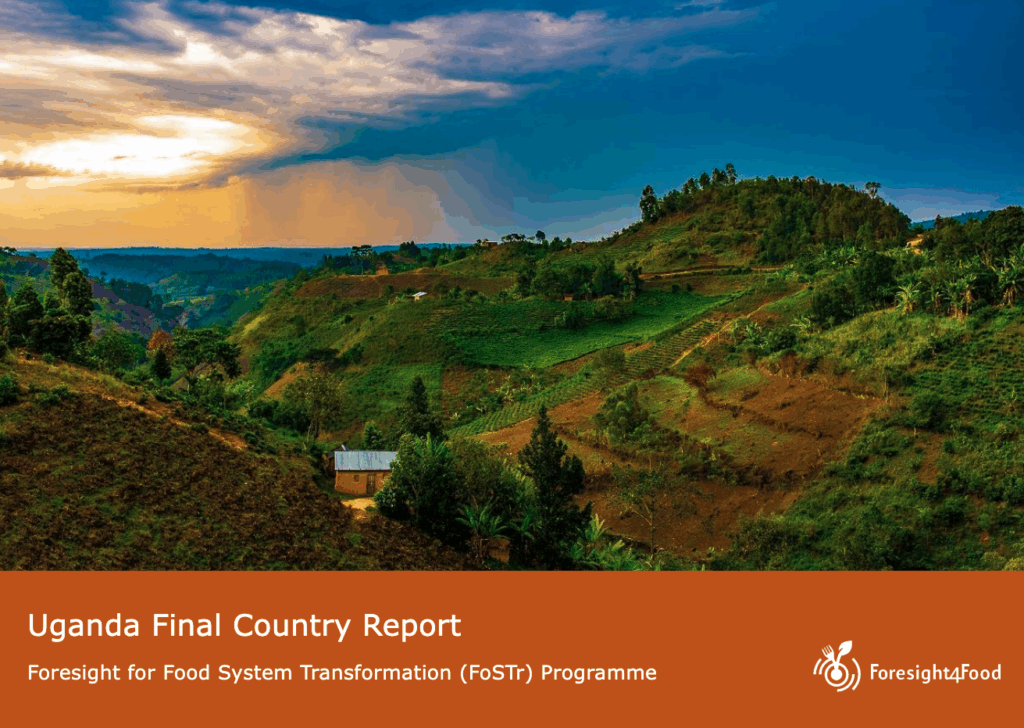
Uganda
The report presents the findings and process of the Foresight4Food FoSTr programme in Uganda, which applied participatory foresight and futures thinking to help Ugandan policymakers and stakeholders anticipate and shape the long-term transformation of the country’s food system. Through a structured process of mapping the current food system, exploring future scenarios, and mobilizing for change, the FoSTr engaged diverse actors to address interconnected challenges of food insecurity, malnutrition, environmental degradation, and rural poverty.
Key outputs of the project include the development of four qualitative scenarios based on critical uncertainties, like governance response and income inequality, quantitative modelling of different diet futures, and the co-creation of a food systems action agenda. The project also produced targeted policy briefs on climate resilience, food loss and waste, and obesity. The report highlights the importance of institutionalizing foresight thinking, integrating it into research and education, and continuing to support government partners in developing resilient, forward-looking food system strategies.

Bangladesh
The report outlines Bangladesh’s comprehensive journey through the Foresight for Food System Transformation (FoSTr) programme, which aims to support national efforts to build a more resilient, equitable, and sustainable food system. It details how researchers, government institutions, and development partners collaborated to map the country’s complex food system, analyze key drivers and trade-offs, and identify critical uncertainties such as climate resilience, consumption patterns, business structure, and equity.
Building on this foundation, the report describes how foresight insights were used to mobilize systemic change. Looking ahead, the report emphasises institutionalisation of foresight, continued capacity-building, and deeper integration of futures analysis into policy planning as key to sustaining food system transformation in Bangladesh.
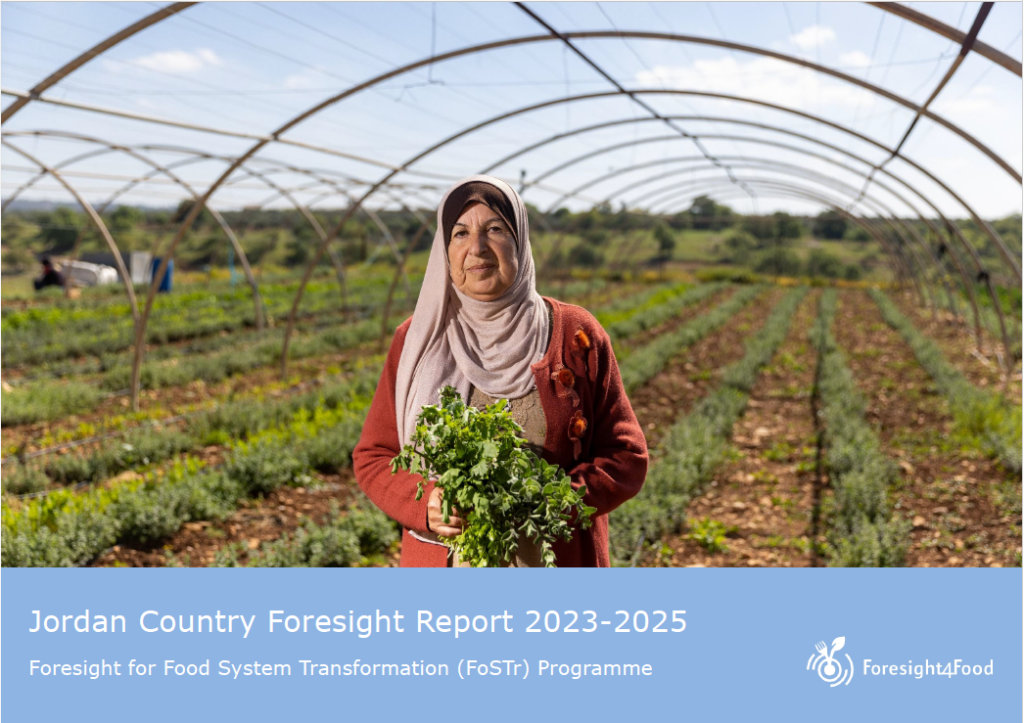
Jordan
Jordan’s food system faces major pressures, including water scarcity, climate change, unhealthy diets, high food waste, and dependence on imports. Through the FoSTr programme, stakeholders mapped the system, analysed key drivers, and developed future scenarios. This process revealed critical trade-offs and highlighted leverage points such as reducing food loss and waste, shifting to healthier Mediterranean-style diets, and improving technological and economic capacity.
The report highlights how achieving a resilient, resource-efficient, and well-governed food system requires integrated cross-sectoral policies, investments in water and energy systems, support for smallholders, and widespread adoption of foresight tools.
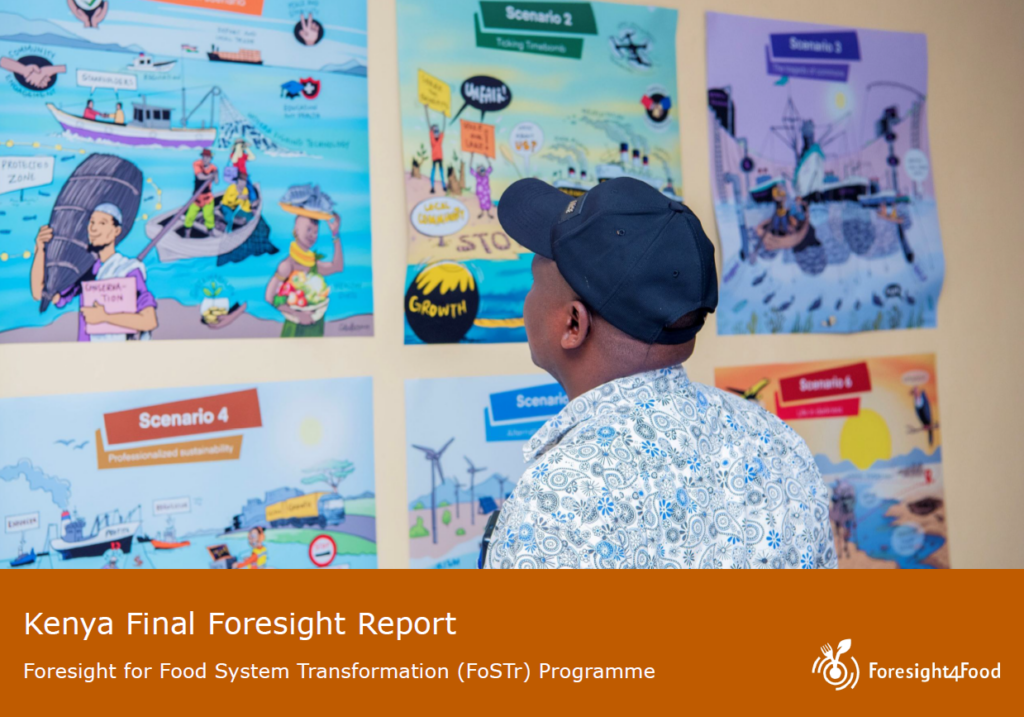
Kenya
Transforming Kenya’s food system is essential to address interconnected challenges of food insecurity, malnutrition, environmental degradation, and rural poverty. Kenya’s current food systems, central to health, economy, and the environment face challenges to ensure equitable access to healthy diets, with persistent child undernutrition, rising adult obesity, and mounting ecological stress.
The report highlights how, in the FoSTr programme, foresight and systems thinking were applied to anticipate and help shape long-term change, enabling stakeholders to plan resilient strategies rather than react to crises. The foresight process brought together diverse actors to analyse trends, identify uncertainties, and construct scenarios to support the Kenyan food system transformation agenda.